
Introduction: Understanding Jaw Pain and Swelling
Pain and swelling near the jaw, especially while eating, may not always be a dental issue. Sometimes, these symptoms can happen due to blockage in the salivary ducts. Saliva plays a key role in digestion and keeps your mouth healthy. It helps break down food and protects teeth from decay. However, when a salivary duct gets blocked, saliva cannot flow freely. As a result, you may feel pain, swelling, or even repeated infections. Early evaluation by an ENT Specialist in Hyderabad is important. At Asian ENT & Allergy Clinic, we offer advanced ENT treatment, including Sialendoscopy. This minimally invasive procedure helps diagnose and treat certain salivary gland problems with less discomfort and faster recovery.
What Is Sialendoscopy?
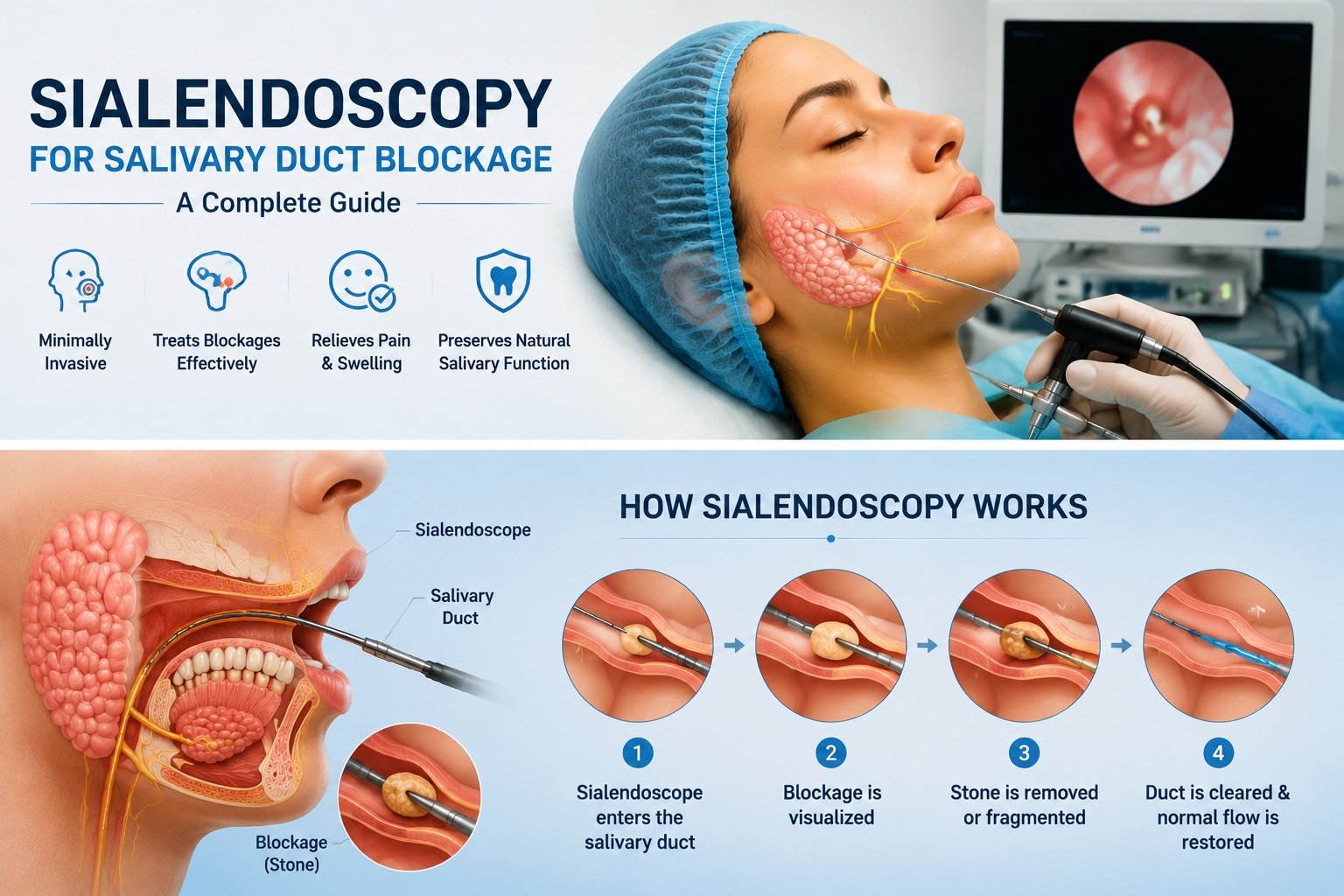
Sialendoscopy is a modern, minimally invasive ENT procedure. It uses a tiny endoscope to look inside the salivary ducts. This tool helps doctors see blockages, such as stones or narrow areas, in real time. Unlike traditional surgery, Sialendoscopy does not need large cuts. Instead, it uses the natural opening of the duct. This approach allows for targeted salivary duct blockage treatment and often preserves the gland. Sialendoscopy Treatment in Hyderabad is now available at Asian ENT & Allergy Clinic, offering patients a safer and quicker option for salivary gland treatment.
Understanding Salivary Duct Blockage
Salivary ducts are small tubes that carry saliva from the glands to your mouth. Sometimes, these ducts can get blocked. This blockage can happen for several reasons:
When a duct is blocked, saliva cannot flow as it should. This can lead to pain, swelling, and sometimes infection. Over time, the gland may become tender and cause more problems if not treated.
Symptoms of Salivary Duct Blockage
Common symptoms include:
If you notice these symptoms, especially if they keep coming back, it is best to consult an ENT Specialist in Hyderabad. Early care can prevent further problems and help you recover faster.
How Is Salivary Duct Blockage Diagnosed?
First, your ENT doctor will ask about your symptoms and medical history. Next, a clinical examination is done to check for swelling or tenderness. Sometimes, imaging tests like ultrasound or CT scan are needed to see the blockage. In many cases, Sialendoscopy is used for direct visualization. This allows the doctor to see inside the duct and find the exact cause of the blockage. Accurate diagnosis is important for choosing the right salivary duct blockage treatment.
How Does Sialendoscopy Work?
Sialendoscopy Treatment in Hyderabad at Asian ENT & Allergy Clinic is performed by experienced ENT specialists using advanced equipment.
Benefits of Sialendoscopy
Because of these benefits, Sialendoscopy is now a preferred option for many patients needing salivary gland swelling treatment.
Who Can Consider Sialendoscopy?
Sialendoscopy is suitable for patients who have:
However, a specialist evaluation is needed to decide if this procedure is right for you. The ENT Specialist in Hyderabad at Asian ENT & Allergy Clinic will guide you based on your specific needs.
Most patients feel only mild discomfort after the procedure. It is important to follow all post-procedure instructions. You should drink plenty of water, take prescribed medicines, and attend follow-up visits. Usually, recovery is quick, and you can return to normal activities soon. If you notice any new symptoms, contact your ENT specialist right away.
Why Choose Asian ENT & Allergy Clinic?
At Asian ENT & Allergy Clinic, we offer:
Asian ENT & Allergy Clinic provides advanced ENT care in Hyderabad with a focus on accurate diagnosis and personalised treatment. Our team is dedicated to helping you recover quickly and comfortably.
Conclusion
Salivary duct blockage can cause pain, swelling, and repeated infections. Sialendoscopy is a minimally invasive option for selected patients. Early evaluation by an ENT specialist is key to effective salivary gland treatment in Hyderabad. If you have symptoms, do not wait. Timely care can make a big difference in your recovery.
Experiencing recurrent swelling or pain near your salivary glands? Consult an ENT Specialist at Asian ENT & Allergy Clinic for expert evaluation and personalised Sialendoscopy Treatment in Hyderabad.
Frequently Asked Questions (FAQs)
1. What is Sialendoscopy?
Sialendoscopy is a minimally invasive ENT procedure. It uses a small endoscope to look inside the salivary ducts. This helps diagnose and treat blockages without large cuts.
2. What causes salivary duct blockage?
Common causes include salivary stones, inflammation, narrowing of the duct, or repeated infections. These problems can block saliva flow and cause swelling or pain.
3. Is Sialendoscopy a painful procedure?
Sialendoscopy is usually well-tolerated. Most patients feel only mild discomfort during and after the procedure. Local or general anesthesia may be used for comfort.
4. How long does recovery take after Sialendoscopy?
Recovery is often quick. Most people return to normal activities within a few days. Following your doctor’s instructions helps ensure smooth healing.
5. Can Sialendoscopy treat salivary stones?
Yes, Sialendoscopy can help remove salivary stones and clear blockages. It is a preferred method for many patients with salivary stone removal needs.
6. When should I consult an ENT specialist for salivary gland swelling?
If you have repeated swelling, pain, or infections near your jaw or cheek, consult an ENT specialist. Early evaluation can help prevent complications and guide the best treatment.