What Is Oral Cancer?
Oral cancer is a disease where cells in the mouth grow in an uncontrolled way. These cells can form lumps or sores that do not heal. Early oral cancer screening helps find these changes before they become serious. The mouth includes the lips, tongue, cheeks, gums, and roof or floor of the mouth. According to the World Health Organization (WHO), oral cancer is one of the most common cancers worldwide. Early detection can save lives.
What Are the Early Warning Signs of Oral Cancer?
Often, early signs of oral cancer are easy to miss. However, knowing what to look for can help. Watch for these mouth cancer warning signs:
For example, if you notice any of these changes, it is important to seek an oral cancer evaluation. Early signs of oral cancer may be painless at first.
Can Oral Cancer Develop Without Pain?
Yes, oral cancer can develop without pain. In fact, many early oral cancer symptoms do not hurt. Because of this, people may ignore them. Still, even painless changes can be serious. If you see a sore, patch, or lump that does not go away, you should get an oral cancer screening. The American Cancer Society notes that pain is not always present in the early stages.
Why Should You Pay Attention to White and Red Patches?
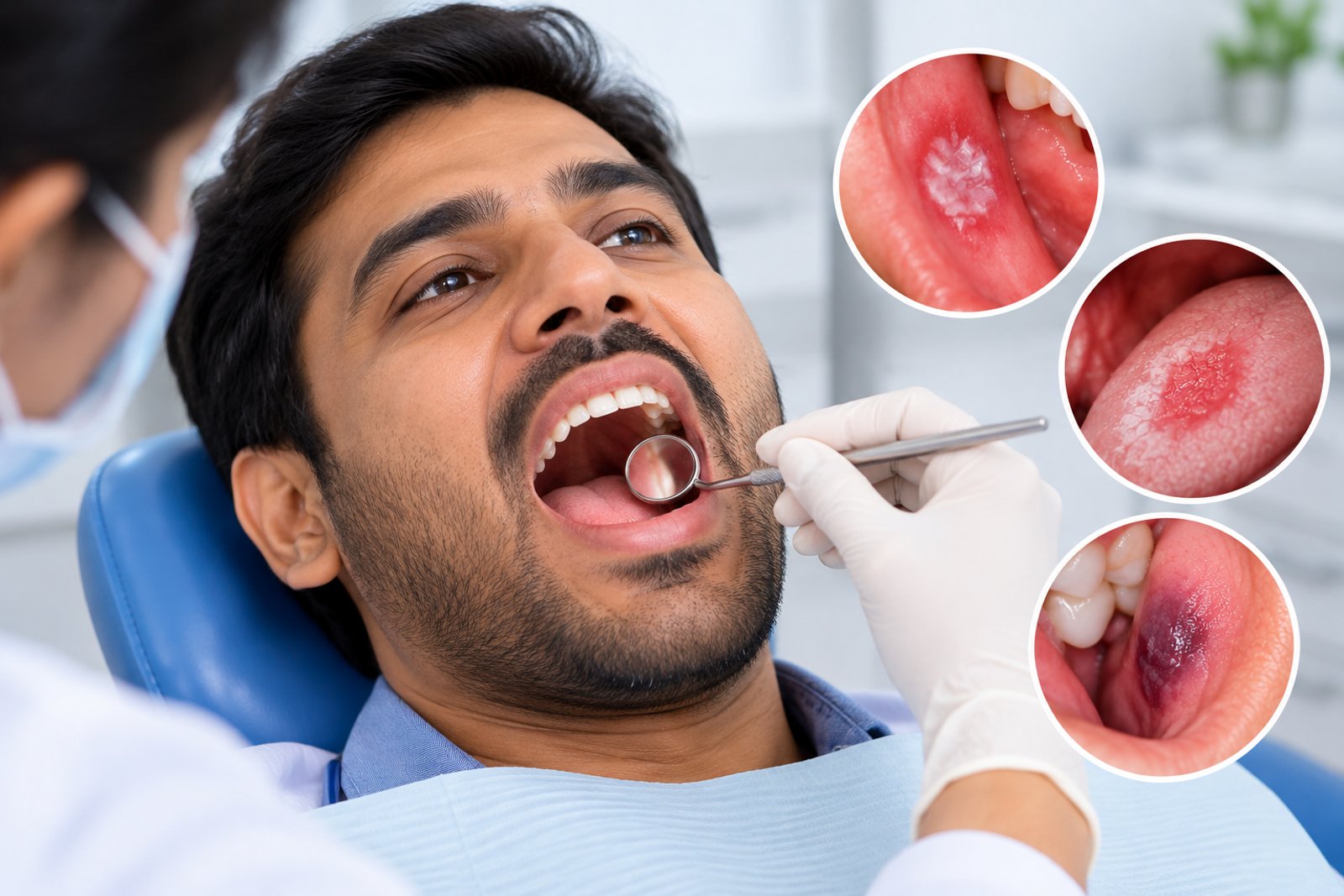
White patches in the mouth, called leukoplakia, or red patches, called erythroplakia, can be early warning signs. While not all patches mean cancer, some may turn into cancer over time. Therefore, any patch that lasts more than two weeks should be checked by a doctor. Oral cancer screening helps find these changes early. The CDC recommends regular checks for people with risk factors.
Can Gutkha and Tobacco Increase Oral Cancer Risk?
Yes, using gutkha, tobacco, or betel nut raises your risk of oral cancer. In addition, smoking and chewing tobacco are leading causes. According to the Indian Council of Medical Research (ICMR), tobacco users are at much higher risk. Signs of mouth cancer in tobacco users may include non-healing ulcers, white or red patches, or thickened areas. Quitting tobacco lowers your risk over time.
What Is Oral Submucous Fibrosis?
Oral submucous fibrosis is a condition where the mouth lining becomes stiff and hard to move. This often happens in people who chew gutkha or betel nut. As a result, opening the mouth becomes difficult. This condition can increase the risk of developing oral cancer. If you notice tightness or burning in your mouth, you should see a doctor for an oral cancer evaluation.
Who Should Consider Oral Cancer Screening?
Anyone can get oral cancer, but some people have higher risk. You should consider oral cancer screening if you:
Even if you do not have these risk factors, regular screening is helpful. Early detection is key for better outcomes.
How Is Oral Cancer Screening Performed?
During an oral cancer screening, a doctor or dentist checks your mouth for unusual changes. First, they look for sores, patches, or lumps. Next, they may gently feel your cheeks, tongue, and neck. Sometimes, special lights or dyes help spot changes. In some cases, an ENT consultation may be needed for a full head and neck examination. This process is quick and simple.
Is Oral Cancer Screening Painful?
Most people find oral cancer screening painless. The doctor will use a light and mirror to look inside your mouth. They may press gently on your cheeks, tongue, and neck. Usually, there is no discomfort. If you have a sore, you may feel mild tenderness. However, the screening itself does not hurt.
How Is Oral Cancer Diagnosed?
If your doctor finds a suspicious area, they may suggest further tests. For example, a small sample of tissue may be taken for a biopsy. This helps confirm if cancer cells are present. Sometimes, imaging tests like X-rays or scans are used. An ENT specialist may perform a full oral cancer evaluation. Early diagnosis gives the best chance for successful treatment.
Can Oral Cancer Be Detected Early?
Yes, oral cancer can often be detected early with regular screening. Many early signs of oral cancer are visible or can be felt. For this reason, regular oral cancer screening is important, especially for people with risk factors. Early detection improves treatment outcomes and survival rates, according to the National Institute of Dental and Craniofacial Research (NIDCR).
Can Oral Cancer Be Prevented?
While not all cases can be prevented, you can lower your risk. Here are some tips:
Additionally, using sun protection on your lips can help prevent lip cancer.
How Can You Check Your Mouth for Unusual Changes?
Checking your mouth at home can help spot early changes. Here is how you can do it:
If you notice anything unusual, you should get an oral cancer screening soon. Early action makes a difference.
When Should You Consult an ENT Specialist?
You should consult an ENT specialist if you have:
For any of these signs, an ENT consultation and head and neck examination are important. Early evaluation can help rule out or confirm oral cancer.
Frequently Asked Questions
What is the first sign of oral cancer?
The first sign is often a sore or ulcer in the mouth that does not heal within two weeks. White or red patches may also appear early.
Can oral cancer occur without tobacco use?
Yes, oral cancer can develop in people who do not use tobacco. Other risk factors include alcohol use, HPV infection, and family history.
Is every white patch inside the mouth cancerous?
No, not every white patch is cancerous. However, some white patches can turn into cancer over time. It is best to have any persistent patch checked by a doctor.
How often should oral cancer screening be performed?
Most adults should have an oral cancer screening once a year. People with risk factors may need more frequent checks. Your doctor can advise you.