Introduction
Many people experience nasal obstruction, which means trouble breathing through the nose. For some, a blocked nose can make sleep difficult. Others may find it hard to focus during the day. Because nasal obstruction can affect daily life, it is important to find out what is causing it. At Asian ENT Care Centre, our team helps patients in Hyderabad and nearby areas find relief. Understanding the cause is the first step toward better breathing and comfort.
What Is Nasal Obstruction?
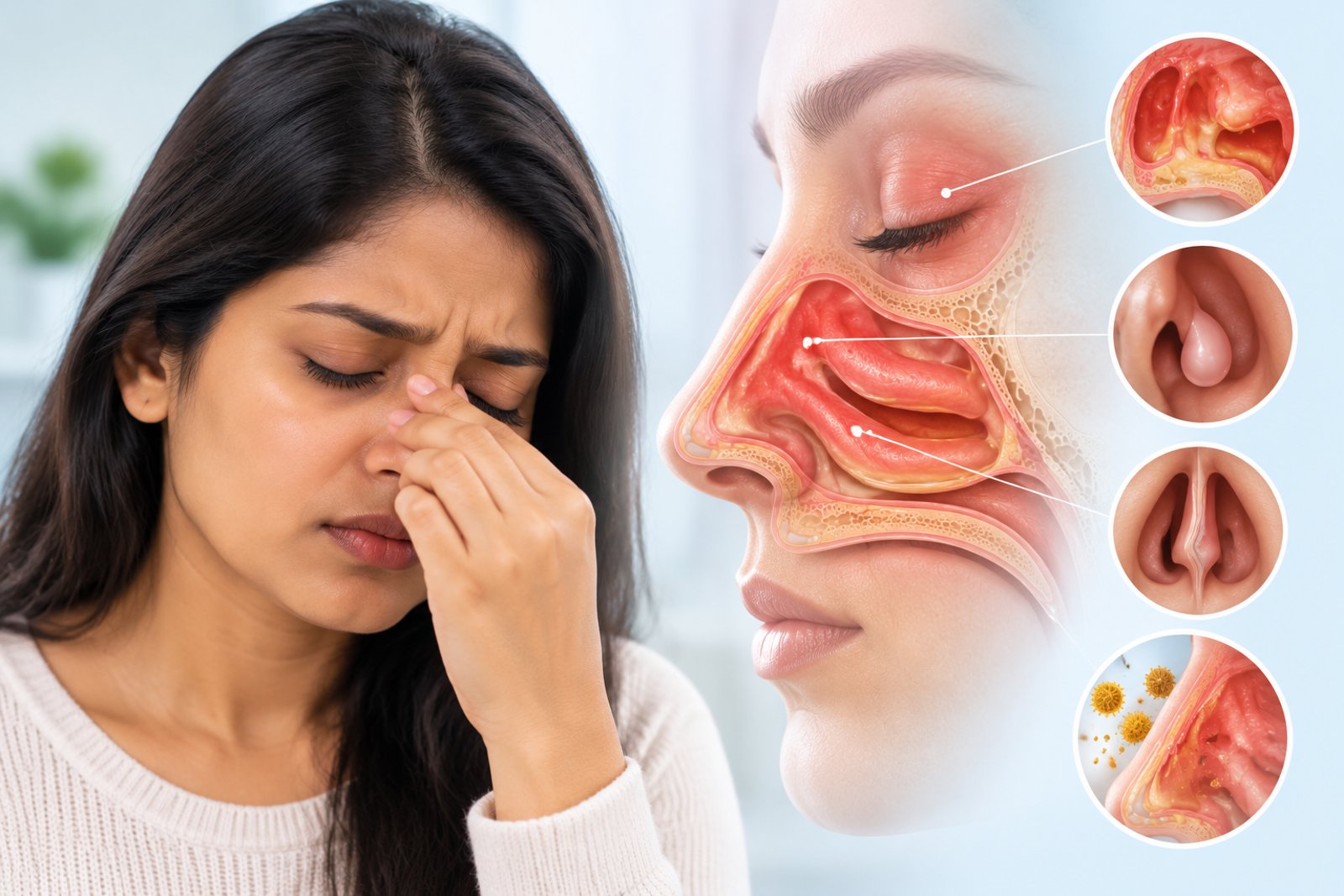
Nasal obstruction, also known as nasal blockage, happens when airflow through the nose is reduced. Sometimes, both sides of the nose feel blocked. Other times, only one side is affected. As a result, breathing through the nose becomes hard. This can lead to mouth breathing, which may cause a dry mouth or sore throat. Even simple activities, like talking or eating, can feel uncomfortable when the nose is blocked.
Common Causes
Deviated Nasal Septum
The septum is the thin wall inside the nose that separates the two nostrils. When this wall is bent or off-center, it is called a deviated septum. Because of this, one side of the nose may be more blocked than the other. This structural problem can make breathing through the nose difficult, especially at night or during exercise.
Allergic Rhinitis
Allergic rhinitis is caused by allergies to things like dust, pollen, or pet dander. When the nose reacts to these triggers, the lining inside swells up. As a result, the nose feels stuffy or blocked. In addition, sneezing and watery eyes may occur. Allergic rhinitis is a common reason for nasal blockage, especially in cities like Hyderabad where air quality can vary.
Nasal Polyps
Nasal polyps are soft, painless growths inside the nose. Although they are not cancer, they can block airflow. Polyps often develop in people with allergies or asthma. Because they take up space, they make it harder for air to pass through the nose. In some cases, polyps can also reduce the sense of smell.
Sinus Problems
Sinus problems, such as sinusitis, cause swelling and inflammation around the nose. When the sinuses are inflamed, they can block the nasal passages. This leads to a feeling of pressure in the face and a blocked nose. Sinus issues are common and may be triggered by infections or allergies.
Symptoms
Diagnosis
To find the cause of nasal obstruction, doctors at Asian ENT Care Centre use several methods. First, a nasal examination checks for swelling, polyps, or a deviated septum. Next, a nasal endoscopy uses a small camera to look inside the nose. This helps spot any hidden problems. Sometimes, allergy tests are done to find out if allergies are causing the blockage. In certain cases, imaging tests like a CT scan may be needed to see the sinuses or deeper structures. These steps help the ENT specialist in Hyderabad choose the best treatment.
Treatment Options
Treatment for nasal blockage depends on the cause. For many people, medicines such as nasal sprays or antihistamines help reduce swelling. If allergies are the problem, allergy management is important. This may include avoiding triggers or using special medicines. In some cases, simple nasal procedures can remove polyps or correct a deviated septum. When needed, surgery may be suggested to fix structural issues or clear blocked sinuses. The ENT specialist will discuss the best options for each patient.
Frequently Asked Questions
Why is my nose blocked every day?
Many people have a blocked nose every day due to allergies, a deviated septum, or sinus problems. Because these conditions can be ongoing, the blockage may not go away on its own. It is important to see an ENT specialist in Hyderabad if the problem lasts more than a few weeks.
Can nasal blockage affect sleep?
Yes, a blocked nose can make it hard to sleep well. Since breathing through the nose is important for restful sleep, nasal obstruction may cause snoring or frequent waking. Over time, poor sleep can affect mood and health.
When should I see an ENT doctor?
It is best to see an ENT specialist if nasal obstruction lasts more than two weeks, causes severe discomfort, or leads to problems like sleep disturbance or frequent infections.