
Introduction
Salivary gland problems can cause pain and swelling. In the past, treating salivary gland stones often meant surgery. However, traditional surgery could lead to discomfort and longer recovery. Today, sialendoscopy offers a modern, minimally invasive solution. This advanced technique helps with salivary gland stone removal and other salivary gland disorders. As a result, patients experience less pain and a quicker return to normal life.
What Is Sialendoscopy?
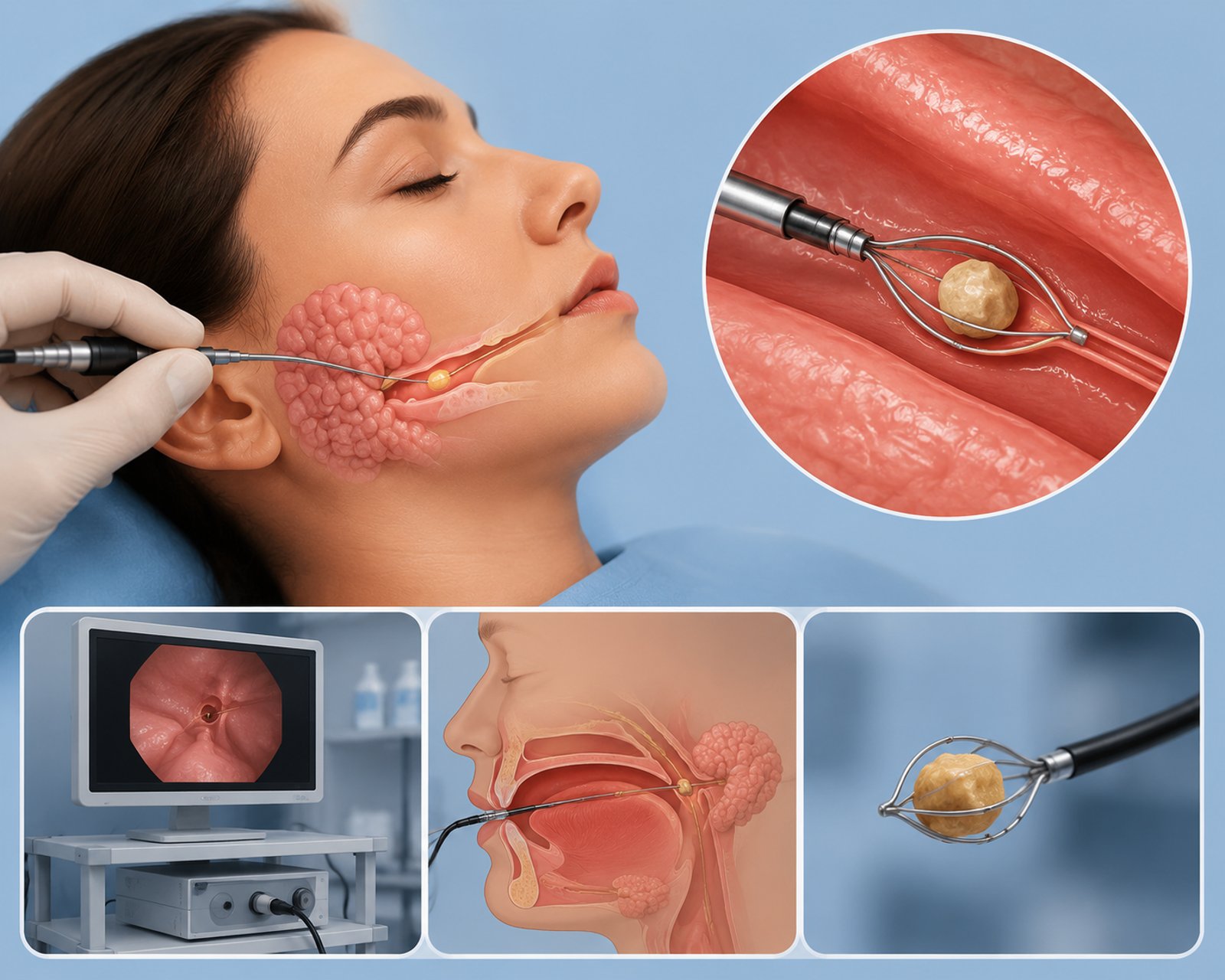
Sialendoscopy is a special procedure that uses a tiny camera. Doctors use this camera to look inside the salivary ducts. These ducts carry saliva from the glands to the mouth. With sialendoscopy, doctors can find and treat problems like stones or blockages. Because it is minimally invasive, there are no large cuts or stitches. Instead, the doctor works through the natural opening of the duct.
How Does Sialendoscopy Work?
During sialendoscopy, the doctor follows a few simple steps:
Because the camera guides the doctor, the treatment is precise. This approach helps protect the gland and nearby tissues.
Conditions Treated With Sialendoscopy
Sialendoscopy is useful for many salivary gland disorders. For example, it can help with:
Because sialendoscopy is gentle, it is often chosen for these problems.
Benefits of Sialendoscopy
Sialendoscopy offers many advantages over traditional surgery. For instance:
Because of these benefits, sialendoscopy is now a preferred choice for many ENT specialists.
Recovery After Sialendoscopy
After sialendoscopy, most people feel better quickly. However, some mild swelling or soreness may occur. To help with healing, doctors often recommend:
Because recovery is usually smooth, most patients can return to normal life within a few days.
FAQs
Is sialendoscopy painful?
Most patients feel little to no pain during the procedure. Local anesthesia keeps the area numb. Afterward, mild discomfort may occur, but it usually goes away quickly.
How long does sialendoscopy take?
The procedure usually takes 30 to 60 minutes. However, the exact time depends on the number and size of stones or blockages.
Will I need to stay in the hospital?
In most cases, sialendoscopy is done as a day procedure. Patients can go home the same day.
Are there any risks?
Like any procedure, there are small risks. These may include infection, bleeding, or duct injury. However, serious problems are rare when done by an experienced ENT doctor.
Can sialendoscopy treat all salivary gland stones?
Sialendoscopy works well for most stones. However, very large or deeply placed stones may need other treatments.
Conclusion
Sialendoscopy is a safe and effective way to treat salivary gland stones and other duct problems. Because it is minimally invasive, patients enjoy faster recovery and less discomfort. Looking for minimally invasive treatment for salivary gland problems? Consult Asian ENT Care Center for expert evaluation and advanced sialendoscopy care.