
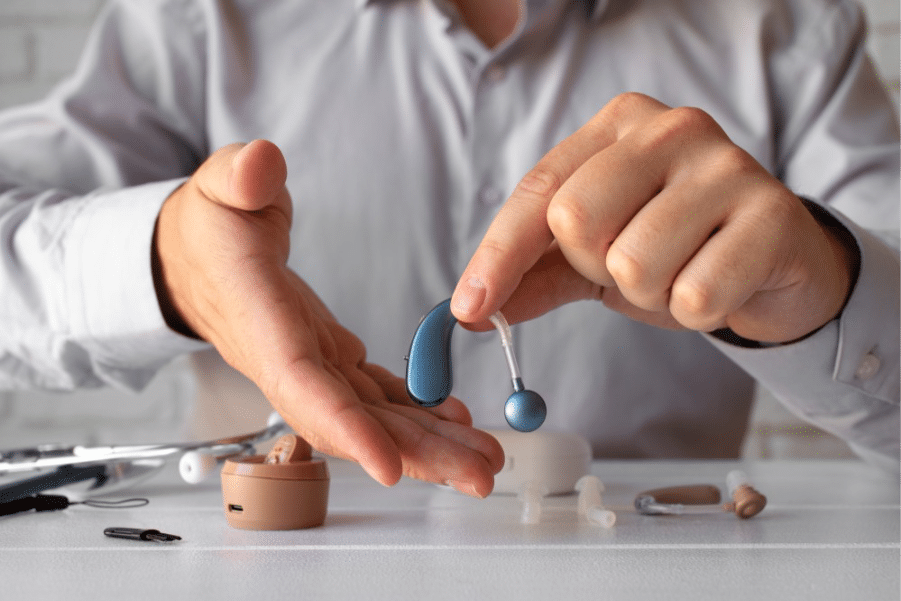
Hearing loss can make daily conversations difficult. It may also affect confidence and quality of life. However, modern hearing loss solutions like hearing aids and cochlear implants can help many people hear better. These devices work in different ways. An ENT specialist will recommend the best option based on your hearing needs. In this blog, we explore cochlear implants vs hearing aids, so you can understand which solution may be right for you.
What Are Hearing Aids?
Hearing aids are small electronic devices that make sounds louder. They help people with mild to severe hearing loss. When you wear a hearing aid, it picks up sounds with a microphone. Then, it makes these sounds louder and sends them into your ear.
There are several types of hearing aids:
Behind-the-ear (BTE)
In-the-ear (ITE)
In-the-canal (ITC)
Completely-in-canal (CIC)
Each type fits differently and suits different needs. For example, BTE aids are easy to handle, while CIC aids are almost invisible. Many adults and children with hearing loss benefit from hearing aids. However, a proper hearing evaluation is important. This ensures the device fits well and works for your hearing level.
What Are Cochlear Implants?
Cochlear implants are advanced devices for people with severe hearing loss. Unlike hearing aids, they do not just make sounds louder. Instead, they send signals directly to the hearing nerve (auditory nerve). This helps people who get little or no help from hearing aids.
A cochlear implant has two main parts:
An external sound processor worn behind the ear
An internal implant placed under the skin by surgery
While hearing aids use the ear’s natural pathway, cochlear implants bypass damaged parts of the ear. They are often recommended for people who cannot understand speech even with strong hearing aids. After surgery, patients need rehabilitation and auditory training to learn how to use the new sounds.
Cochlear Implant vs Hearing Aid: Key Differences
It is important to know how these devices differ. Here are some key points:
Type of hearing loss treated: Hearing aids help mild to severe loss. Cochlear implants are for severe to profound loss.
How sound is processed: Hearing aids amplify sound. Cochlear implants send signals straight to the hearing nerve.
Degree of improvement: Hearing aids help many people. Cochlear implants may help when hearing aids are not enough.
Need for surgery: Hearing aids do not need surgery. Cochlear implants require a surgical procedure.
Rehabilitation: Cochlear implants need more training and therapy after surgery.
Age considerations: Both adults and children can use either device. Early support is important for children.
Long-term support: Both devices need regular check-ups and care.
When Is a Cochlear Implant Considered?
Sometimes, hearing aids do not provide enough help. In these cases, an ENT specialist may suggest a cochlear implant. This option is considered when:
Hearing loss is severe to profound (sensorineural type)
Hearing aids give little or no benefit
Understanding speech is hard, even with hearing aids
Children need early hearing support for speech and learning
Early evaluation and treatment can improve speech and language skills, especially in children. According to the World Health Organization (WHO), timely intervention is key for better outcomes.
Importance of Hearing Assessment
Before choosing a hearing device, a full hearing evaluation is needed. An ENT specialist and audiologist will:
Test your hearing with special equipment
Find out the type and level of hearing loss
Suggest the best hearing solution for you
Monitor your progress over time
Regular check-ups help keep your hearing device working well. They also ensure you get the most benefit from your chosen solution.
Hearing Rehabilitation After Treatment
After getting a hearing aid or cochlear implant, ongoing support is important. For best results, you should:
Attend regular follow-up visits
Take part in speech and hearing therapy
Practice listening with auditory training
Get support from family, especially for children
With the right care, many people adjust well to their new hearing device. Family encouragement can make a big difference, too.
Conclusion
There is no single hearing solution for everyone. The best choice depends on your hearing level, age, lifestyle, and needs. Early hearing evaluation helps find the right option. Both hearing aids and cochlear implants can improve quality of life when chosen carefully.
If you or your loved one is experiencing hearing difficulties, consult the ENT specialists at Asian ENT Care Center for a comprehensive hearing evaluation and personalised guidance on hearing aids or cochlear implants.