Introduction
Imagine your child often asks you to repeat what you say. Sometimes, they turn up the television louder than usual. At school, teachers may notice your child seems inattentive or slow to respond. However, these signs may not mean your child is ignoring you. Instead, they could be signs of glue ear in children. Because glue ear often causes hearing loss without pain, it can go unnoticed. As a result, parents may think their child has behaviour or attention problems. Yet, the real issue may be difficulty hearing due to fluid behind the eardrum.
What Is Glue Ear?
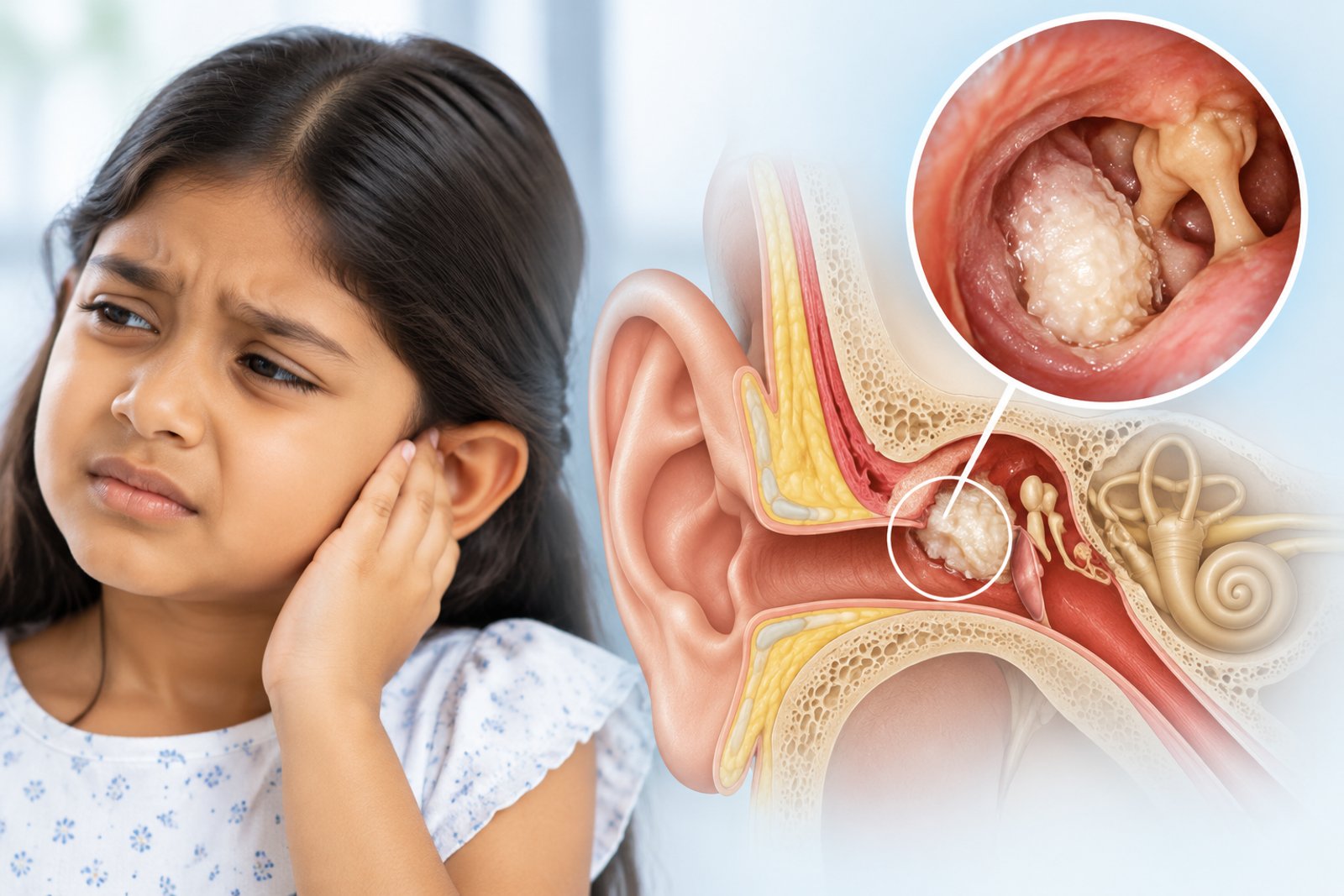
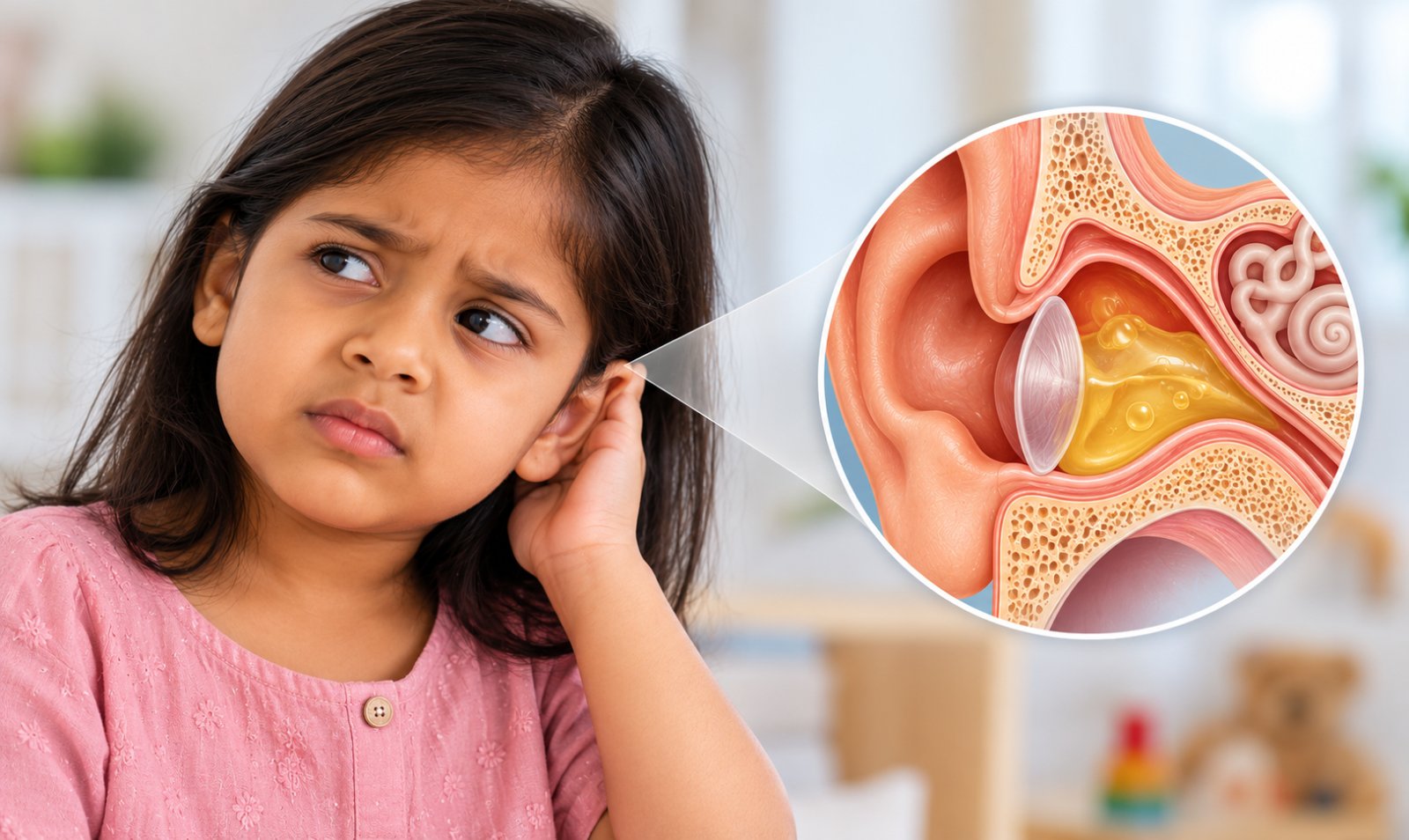
Glue ear, also called otitis media with effusion, is a common condition in children. In this condition, thick fluid collects behind the eardrum in the middle ear. Unlike an ear infection, glue ear usually does not cause pain or fever. Instead, the fluid makes it harder for sound to pass through the ear. Therefore, children may have trouble hearing clearly. While acute middle-ear infections cause pain and swelling, glue ear is often silent. Still, it can affect hearing and speech if not noticed early.
Why Does Glue Ear Develop in Children?
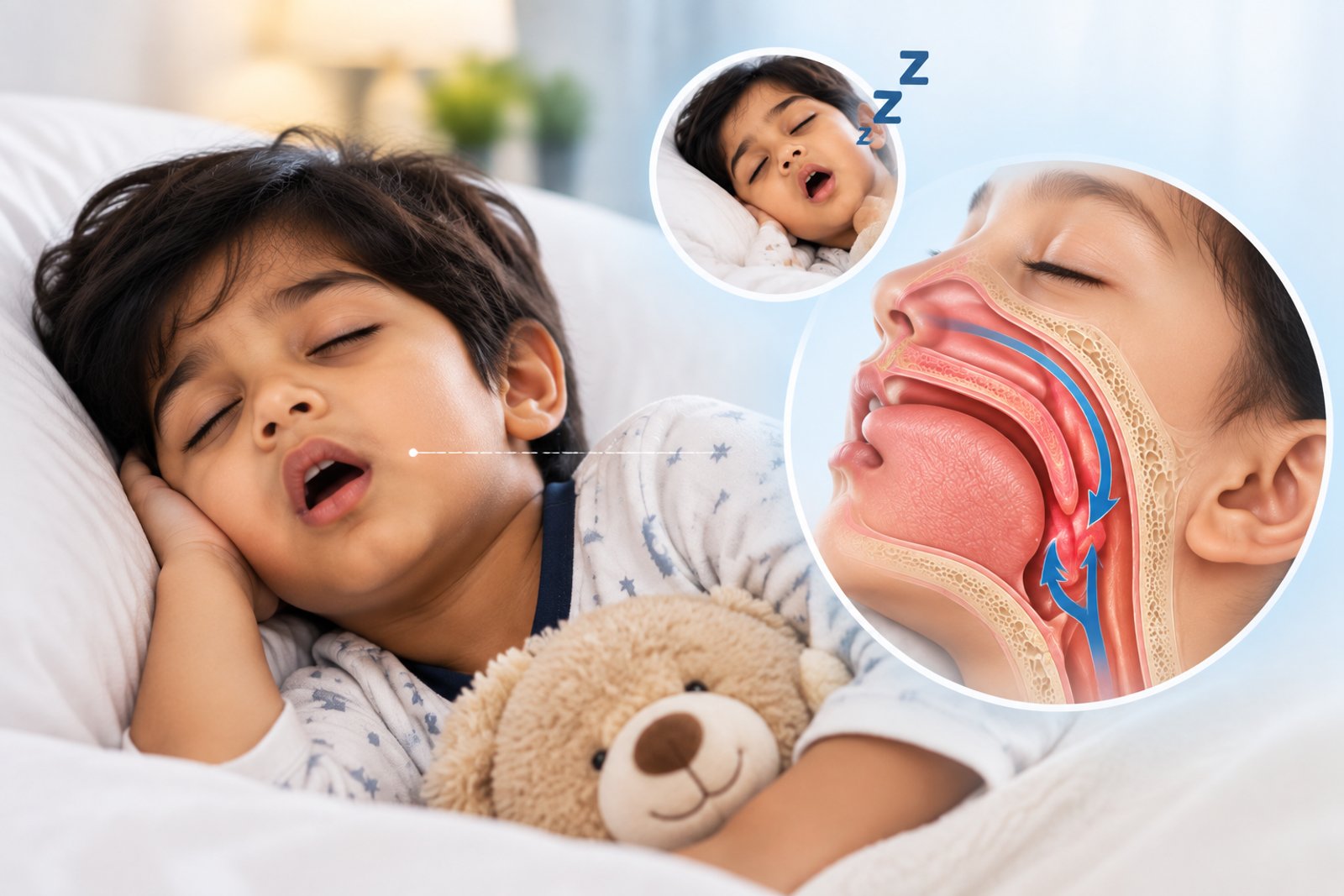
Several factors make glue ear more common in children. First, the Eustachian tube connects the middle ear to the back of the nose. In young children, this tube is shorter and more level. Because of this, it can get blocked more easily. After a cold or cough, the tube may not drain fluid well. Sometimes, enlarged adenoids (tissue at the back of the nose) can block the tube. As a result, fluid builds up behind the eardrum. Children between ages two and six are most at risk. Also, allergies, exposure to smoke, and frequent colds can increase the chance of glue ear.
Early Signs Parents Should Notice
Many children with glue ear do not complain of pain. Instead, parents may notice subtle changes. For example, your child may:
Sometimes, teachers may notice your child is not paying attention. However, these signs may be due to temporary hearing loss in children from glue ear. Early recognition helps prevent learning and speech problems.
Can Glue Ear Affect Speech and Language Development?
Glue ear in children can cause mild to moderate hearing loss. Over time, this may affect how a child hears speech sounds. Because of this, some children may have trouble learning new words or pronouncing sounds. In school, they may miss parts of lessons or group activities. However, not every child with glue ear develops speech delay. Also, not all speech delays are caused by glue ear. Still, if glue ear lasts for many months, it can make it harder for young children to learn language. Early support and hearing checks are important.
How Is Glue Ear Diagnosed?
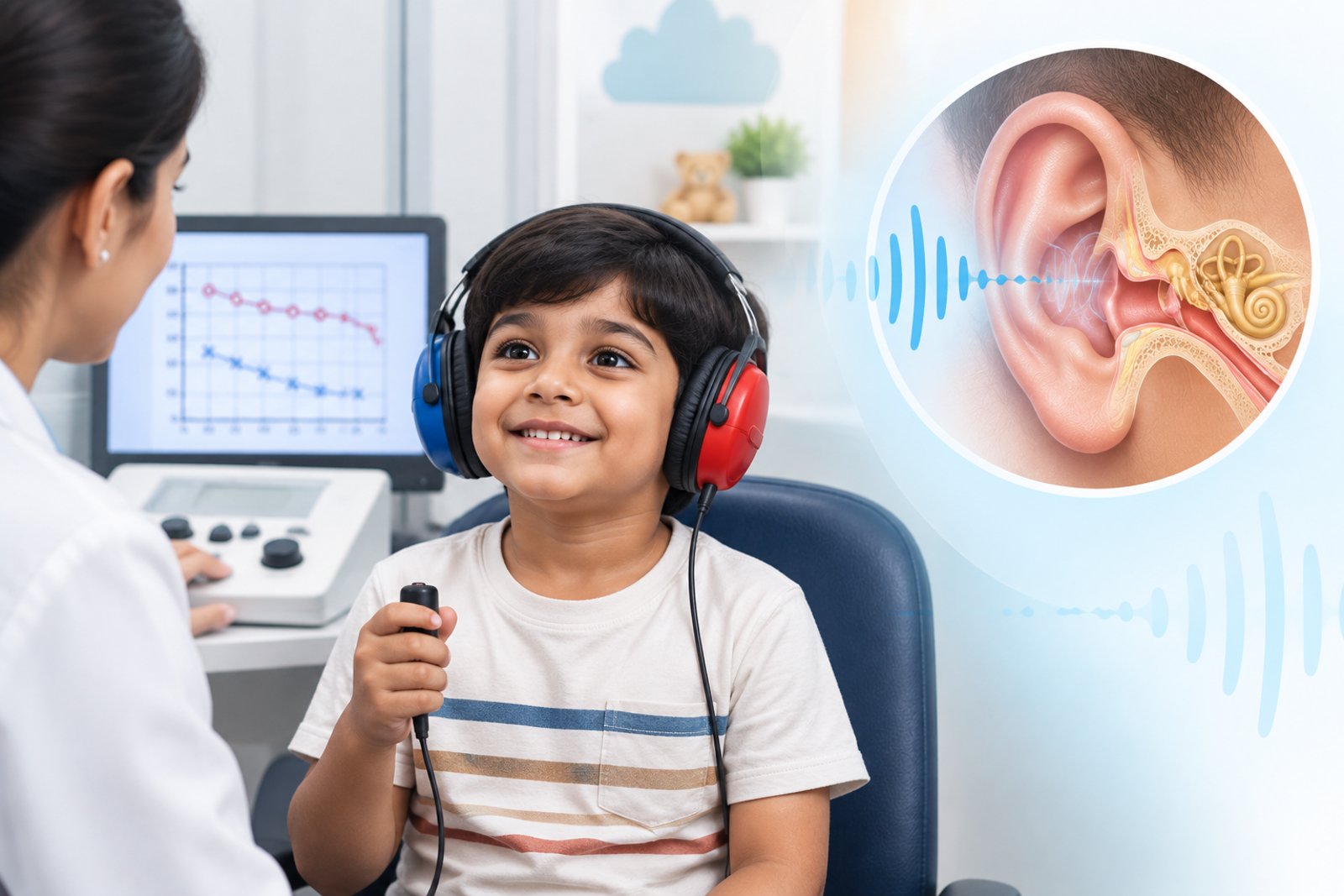
Doctors use several methods to check for glue ear. First, they look inside the ear with a light (otoscopy) to see if fluid is present. Next, they may use a test called tympanometry. This test checks how well the eardrum moves. If the eardrum is stiff, it may mean there is fluid behind it. Age-appropriate hearing tests help measure how well your child hears different sounds. At Asian ENT Care Center in Hyderabad, a paediatric ENT specialist may use these tests to confirm glue ear and plan treatment.
Does Glue Ear Go Away Without Treatment?
In many cases, glue ear in children gets better on its own. Because of this, doctors often recommend a period of watchful waiting. For most children, this means observing for about three months. During this time, regular hearing checks are important. However, if your child has other risks, such as speech delay or learning problems, earlier treatment may be needed. If glue ear lasts longer or causes problems, your doctor will discuss further options. Regular follow-up helps ensure your child’s hearing and speech stay on track.
Treatment Options
Treatment for glue ear depends on your child’s age, symptoms, and hearing needs. Often, doctors suggest:
Doctors do not usually recommend antibiotics, antihistamines, or steroids for simple glue ear. These medicines do not help clear the fluid. Instead, the focus is on hearing support and regular checks.
Tips for Parents
Supporting your child with glue ear can make a big difference. For example, you can:
With these tips, your child can hear and learn better, even with mild hearing loss.
When Should Parents Consult an ENT Specialist?
Sometimes, glue ear in children needs extra care. You should see a paediatric ENT specialist in Hyderabad if:
Early assessment helps prevent long-term problems. Asian ENT Care Centre in Hyderabad offers expert evaluation for children with ear and hearing concerns.
Asian ENT Care Centre and Children’s Ear Health
In Hyderabad, Asian ENT Care Centre provides care for children with glue ear and other ear conditions. Their team understands the unique needs of young children. With careful assessment and family-friendly support, they help children hear and communicate better. If you have concerns about your child’s hearing or speech, a paediatric ENT specialist at Asian ENT Care Centre can guide you through the next steps.
FAQs
Is glue ear painful?
Usually, glue ear does not cause pain. Most children do not complain of discomfort. Instead, the main problem is hearing loss.
Can glue ear cause temporary hearing loss?
Yes, glue ear can cause mild to moderate hearing loss in children. This loss is usually temporary and improves as the fluid clears.
Does glue ear cause speech delay?
Glue ear can sometimes lead to speech delay, especially if hearing loss lasts for many months. However, not all children with glue ear develop speech problems.
How long does glue ear usually last?
Glue ear often clears up within three months. In some cases, it may last longer and need further treatment.
When are grommets recommended?
Grommets are suggested if glue ear lasts more than three months and causes hearing or speech problems. They help drain fluid and improve hearing.
Can glue ear come back?
Yes, glue ear can return, especially if your child gets frequent colds or has allergies. Regular checks help catch it early.
How can parents support a child with glue ear?
Parents can help by speaking clearly, reducing background noise, and working with teachers. Regular hearing checks and following medical advice are also important.