Introduction
Many people experience hearing loss at some point in life. For this reason, hearing tests are important for everyone. In fact, early hearing evaluation can help spot problems before they get worse. At Asian ENT Care Centre, we use audiometry and other types of hearing tests to check your hearing health. These tests are safe for both adults and children. If you are worried about your hearing or your child’s speech, a hearing test can provide answers.
Signs You May Need a Hearing Test
Sometimes, hearing loss happens slowly. Therefore, it can be hard to notice at first. However, there are signs that may show you need a hearing test. For example, you might:
If you notice any of these signs, it is a good idea to get your hearing checked. Early testing can help prevent further issues.
What Is Audiometry?
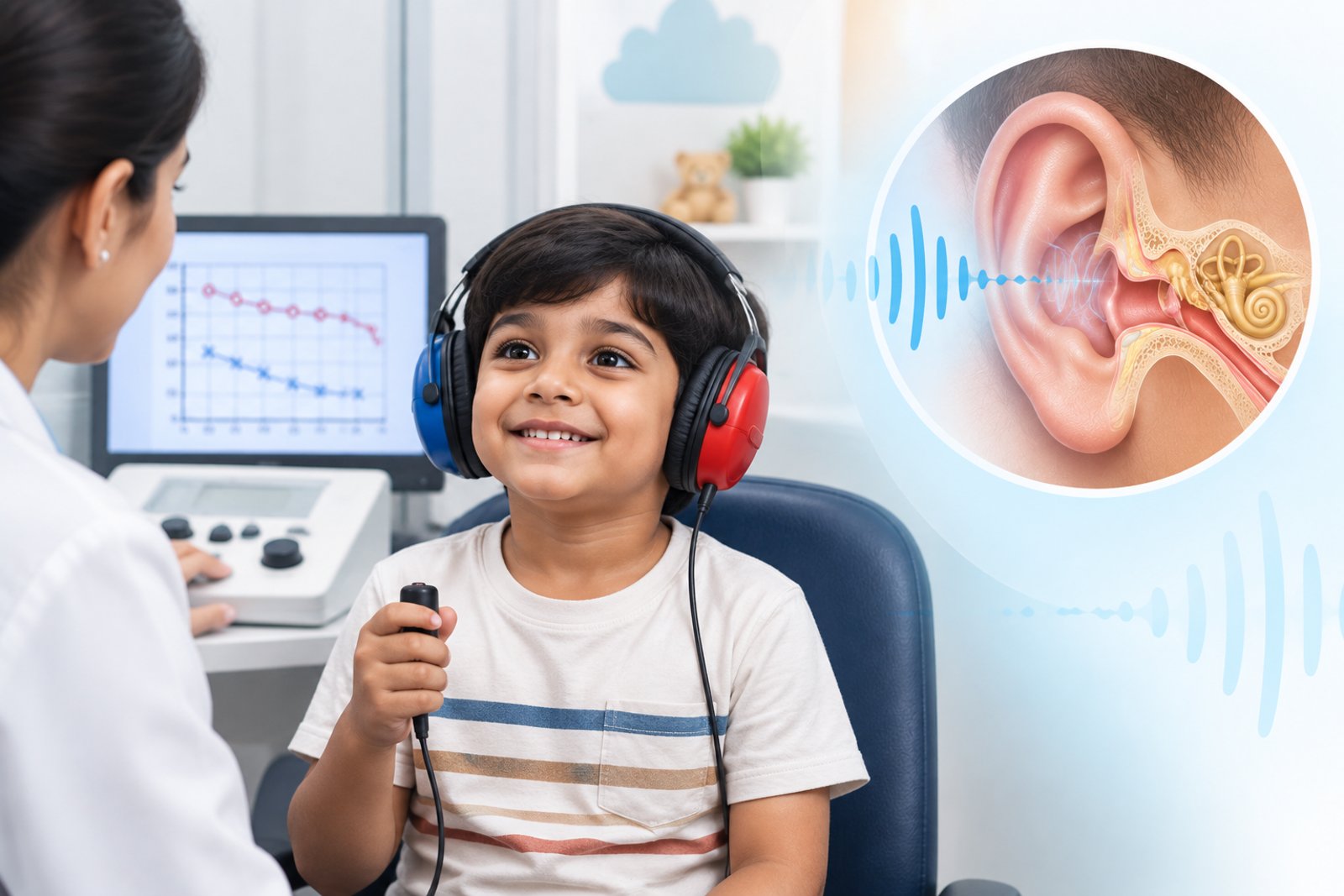
Audiometry is a simple test that measures how well you hear sounds. It is one of the main types of hearing tests used by doctors. During audiometry, you listen to sounds at different pitches and volumes. The test helps find out if you have hearing loss and how severe it is. Because the test is painless, most people find it easy to complete. Audiometry can also help doctors choose the best treatment for you.
Types of Hearing Tests
There are several types of hearing tests. Each one checks a different part of your hearing. For example:
Because each test gives different information, your doctor may use more than one to get a full picture of your hearing.
Who Needs Hearing Tests?
Hearing tests are important for many people. For instance, you may need a test if you:
Even if you do not have symptoms, regular hearing checks can help catch problems early. This is especially true for children and older adults.
Importance of Early Hearing Evaluation
Early hearing evaluation plays a key role in health. When hearing loss is found early, treatment can start sooner. As a result, children can develop better speech and language skills. Adults also benefit, since early help can improve communication and quality of life. According to the World Health Organization, early detection leads to better outcomes for everyone. Therefore, do not wait if you have concerns about hearing.
Frequently Asked Questions
Is hearing testing painful?
No, hearing tests are not painful. Most tests are quick and do not cause discomfort. For children, gentle methods are used to make the process easy.
How long does a hearing test take?
Most hearing tests take about 20 to 30 minutes. However, some tests may take a little longer, especially for young children or complex cases.
Can children undergo hearing tests?
Yes, children of all ages can have hearing tests. In fact, early hearing evaluation is very important for children with speech delay or unclear speech.