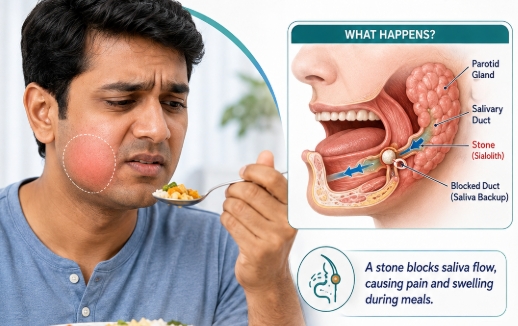

Salivary gland disorders can affect anyone, and they often cause discomfort in the mouth or jaw. These disorders may lead to pain, swelling, or trouble eating. Because saliva is important for health, problems with the salivary glands can impact daily life. At Asian ENT Care Centre, our ENT specialists help diagnose and treat these issues. Understanding the symptoms and treatment for swollen salivary glands can help you seek care early.
Role of Saliva in Digestion and Oral Health
Saliva plays a key role in breaking down food. It helps start the digestion process by making food softer and easier to swallow. In addition, saliva keeps the mouth moist and helps wash away food particles. This reduces the risk of tooth decay and gum disease. Moreover, saliva contains special proteins that protect the mouth from germs. Without enough saliva, eating and speaking can become difficult.
Problems That Affect Salivary Glands
Salivary glands can become affected for several reasons. Sometimes, a blockage or infection can stop saliva from flowing well. For example, stones may form inside the ducts, causing pain and swelling. In other cases, bacteria or viruses can infect the glands. As a result, the area may become red, swollen, or tender. Even certain medical conditions, like autoimmune diseases, can impact how the glands work. Because of these issues, it is important to watch for symptoms and seek help when needed.
Common Salivary Gland Disorders
Symptoms of Salivary Gland Disorders
Many people notice symptoms that affect eating and speaking. For instance, you might feel pain or swelling near your jaw. Below are common signs:
Diagnosis of Salivary Gland Disorders
Doctors use several methods to find the cause of salivary gland symptoms. First, they will do a clinical examination. During this, the doctor checks your mouth and neck for swelling or tenderness. Next, an ultrasound may help show blockages or stones. Sometimes, other imaging tests like CT scans or MRI are needed. These tests give a clear picture of the glands and help plan the best treatment. According to the World Health Organization, early diagnosis improves outcomes.
Treatment Options for Salivary Gland Disorders
Treatment for swollen salivary glands depends on the cause. Often, medicines are used to treat infections or reduce swelling. For example, antibiotics can help with bacterial infections. In some cases, minimally invasive procedures remove stones or drain cysts. These methods are gentle and often do not require long recovery times. However, if a tumour or large stone is found, surgery may be needed. ENT specialists at Asian ENT Care Centre use the latest techniques to ensure safe and effective care.
Frequently Asked Questions (FAQs)
Why do salivary glands swell?
Salivary glands can swell due to blockages, infections, or injury. Sometimes, stones or cysts block the flow of saliva. Infections from bacteria or viruses also cause swelling. In rare cases, swelling may be due to tumours or other health conditions.
Can salivary stones go away on their own?
Sometimes, small salivary stones pass on their own, especially if you drink plenty of water. However, larger stones may need removal by a doctor. If you have ongoing pain or swelling, it is best to see an ENT specialist for advice.
When should I consult an ENT?
You should see an ENT specialist if you have pain, swelling, or trouble swallowing that does not go away. Also, if you notice a lump or dry mouth, seek care.