When Hearing Tests Do Not Tell the Full Story
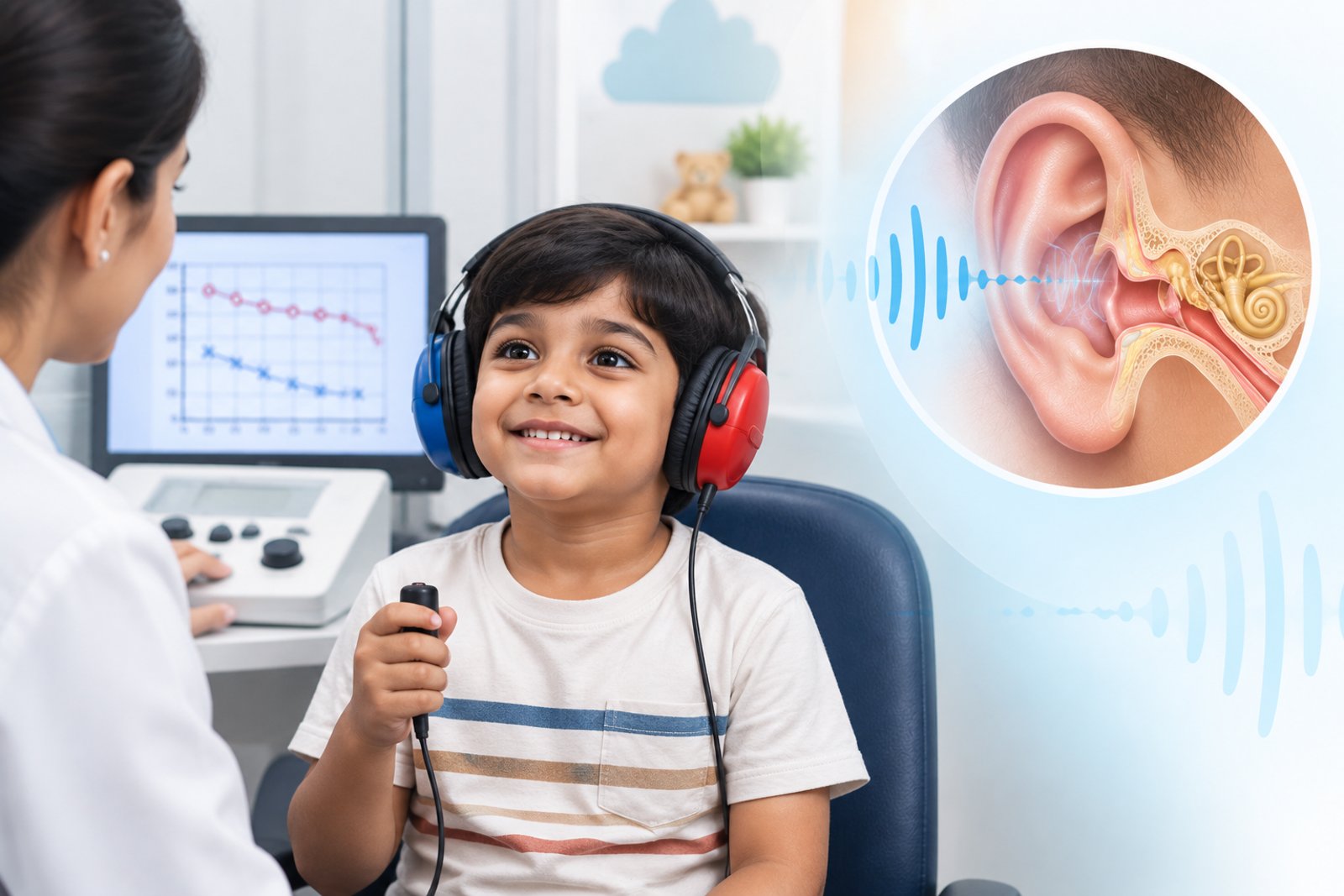
Sometimes, people can hear sounds but still struggle to understand speech. This can be confusing for parents and adults alike. In many cases, standard hearing tests may not explain these problems. Auditory neuropathy spectrum disorder (ANSD) is a hearing nerve disorder that affects how the ear and brain work together. Early evaluation is important, especially for children with delayed speech or adults with unexplained hearing loss. If you notice these signs, seeking help from an ENT specialist for hearing problems can make a big difference.
What Is Auditory Neuropathy Spectrum Disorder?
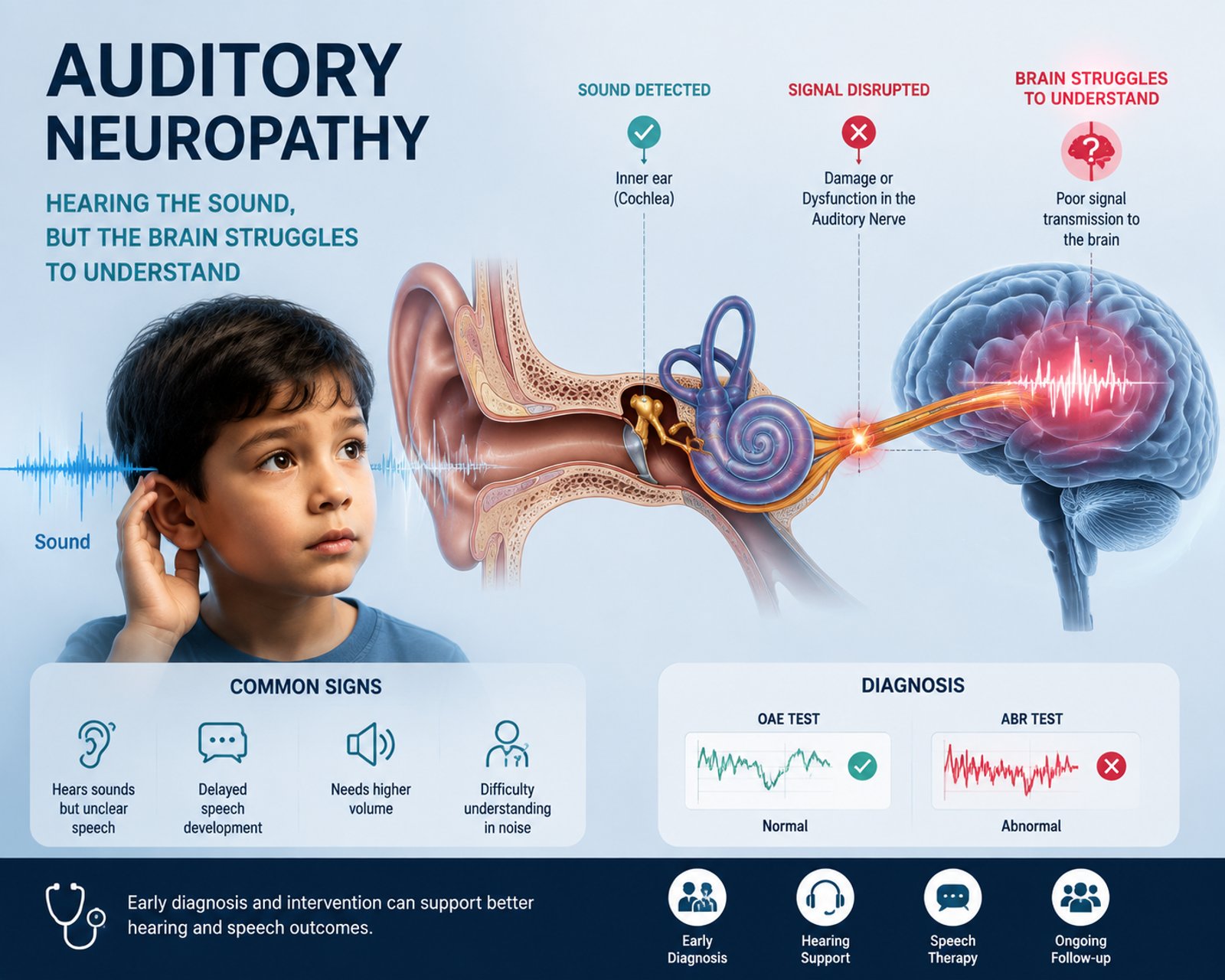
Most hearing loss happens when the inner ear cannot pick up sounds well. However, in auditory neuropathy spectrum disorder, the inner ear may work, but the signals do not reach the brain clearly. The inner ear, called the cochlea, collects sounds. Then, the auditory nerve carries these signals to the brain. Finally, the brain processes these signals into words and meaning. In ANSD, the problem is with the nerve or how the brain receives the signals, not with the ear itself. As a result, people may hear sounds but cannot understand speech clearly.
Causes and Risk Factors
Several factors can lead to auditory neuropathy spectrum disorder. Some people are born with it, while others develop it later. Common causes and risk factors include:
Because these risks vary, early hearing checks are important for all children, especially those with risk factors.
Symptoms of Auditory Neuropathy
Auditory neuropathy spectrum disorder can look different in each person. However, some common symptoms include:
For example, a child may react to loud noises but not respond when called by name. Adults may hear people talking but cannot follow conversations.
Diagnosis of Auditory Neuropathy
Diagnosing auditory neuropathy spectrum disorder involves several tests. Each test checks a different part of the hearing pathway:
By using these tests together, ENT specialists can find out where the problem is and plan the best treatment.
Management and Treatment Options
There is no single treatment for auditory neuropathy spectrum disorder. Instead, doctors create a plan based on each person’s needs. Treatment options include:
Since every case is different, an ENT specialist for hearing problems will guide you to the best options. Early and ongoing support can improve outcomes.
Why Early Intervention Matters
Early intervention is key for children with auditory neuropathy spectrum disorder. When children get help early, they develop better speech and language skills. This also supports learning and social development. For adults, early treatment can improve communication and quality of life. Therefore, if you notice delayed speech or hearing loss in children, or if you experience sudden hearing changes, seek help right away. Timely action leads to better results.
Frequently Asked Questions
Conclusion
Auditory neuropathy spectrum disorder is a unique hearing nerve disorder. It can affect both children and adults. Early diagnosis and the right treatment plan are vital for speech, learning, and communication. If you notice delayed speech, hearing loss in children, or have trouble understanding speech, do not wait. Concerned about hearing difficulties or delayed speech? Consult at Asian ENT Care Center for expert evaluation, advanced hearing assessment, and personalised treatment guidance.