Introduction: A Modern Solution for Salivary Gland Problems
Salivary glands play a key role in digestion and oral health. They produce saliva, which helps break down food and keeps your mouth moist. However, when these glands become blocked or inflamed, you may feel pain and swelling. Often, these problems can disrupt daily life, especially during meals. Advanced ENT procedures like sialendoscopy help diagnose and treat salivary gland problems while preserving gland function. Sialendoscopy is a minimally invasive treatment that offers relief for many patients. At Asian ENT, our team specializes in advanced salivary gland treatments and minimally invasive ENT surgery.
What Are Salivary Gland Problems?
Salivary glands make saliva, which is important for chewing, swallowing, and keeping your mouth clean. When the ducts that carry saliva become blocked or inflamed, saliva flow drops. This can cause pain, swelling, and infections. Common salivary gland disorders include:
These conditions can make eating and talking uncomfortable. Early diagnosis and treatment are important for relief.
Why Do Salivary Gland Blockages Occur?
Salivary gland blockages can happen for several reasons. For example, mineral deposits may form stones that block the duct. Sometimes, the duct itself becomes narrow, making it hard for saliva to pass. Reduced saliva flow, often from dehydration or certain medicines, can also lead to blockages. In addition, repeated inflammation can damage the ducts. As a result, you may feel pain, swelling, dry mouth, and even develop infections.
Symptoms of Salivary Gland Problems
Salivary gland issues often cause clear symptoms. You may notice:
If you have these symptoms, especially if they keep coming back, it is wise to see an ENT specialist for salivary gland problems. Early care can prevent further issues.
What Is Sialendoscopy?
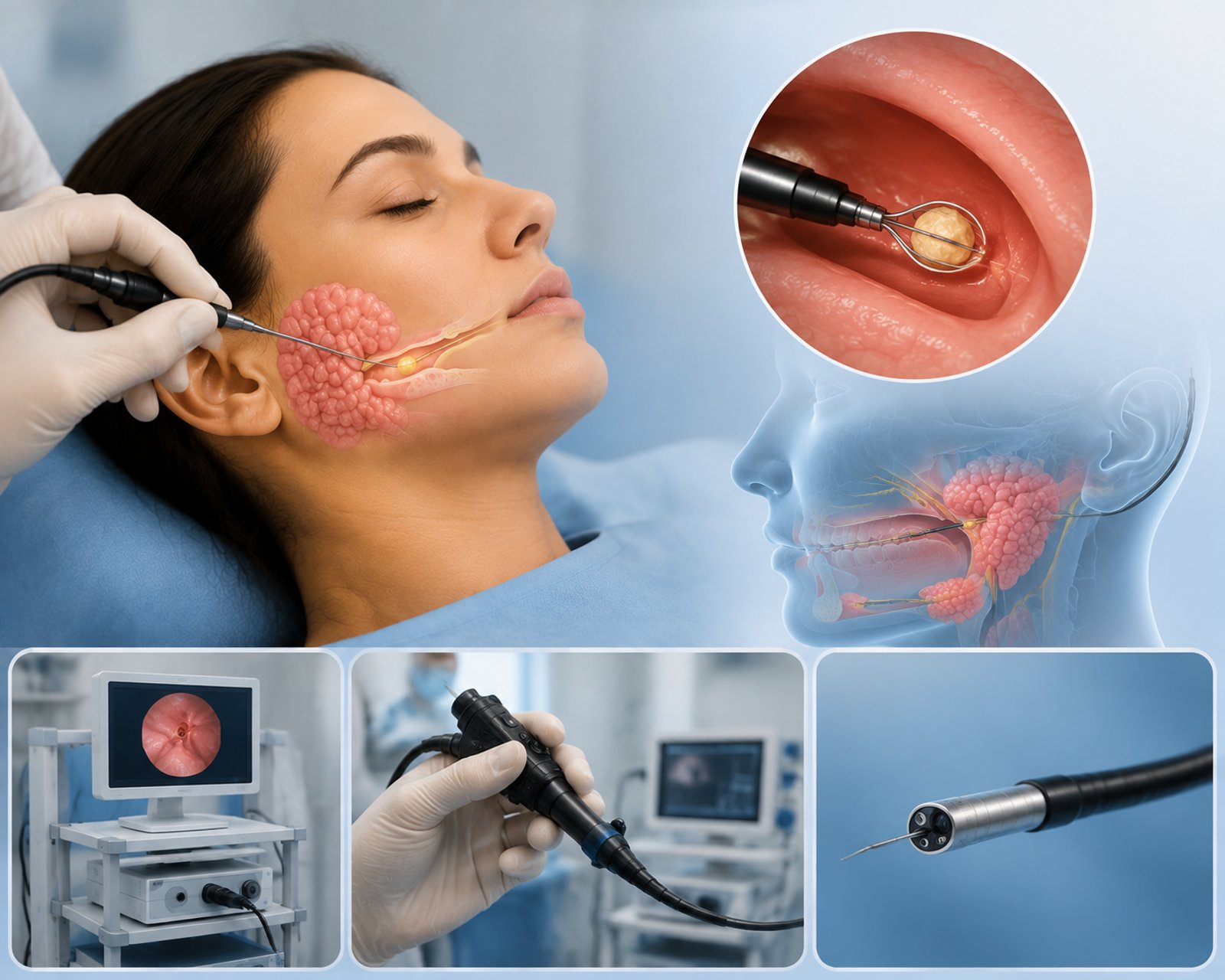
Sialendoscopy is a modern, camera-based procedure used to examine the salivary ducts. During this procedure, a tiny endoscope is gently inserted through the natural opening of the duct. This allows the ENT specialist to see inside the duct and find blockages, stones, or areas of narrowing. In many cases, sialendoscopy treatment can remove blockages without the need for major surgery. This advanced salivary gland treatment helps preserve the gland and restore normal saliva flow.
How Does Sialendoscopy Work?
Sialendoscopy is a step-by-step process:
This approach means many patients can avoid open surgery and recover faster.
Benefits of Sialendoscopy
Sialendoscopy offers many advantages over traditional surgery:
Because sialendoscopy is less invasive, many patients return to normal activities sooner.
Who May Benefit From Sialendoscopy?
Sialendoscopy is helpful for many people with salivary gland disorders, including those who have:
An ENT specialist evaluates each patient individually to decide the most suitable treatment approach. If you have ongoing symptoms, sialendoscopy may be an option for you.
Recovery After Sialendoscopy
Most patients can return to their normal routine as advised by their doctor. However, it is important to stay well-hydrated and maintain good oral hygiene. Always follow your doctor’s post-procedure instructions. In addition, attend all follow-up visits to ensure proper healing. These steps help prevent further problems and support a smooth recovery.
Why Choose Asian ENT for Advanced Salivary Gland Treatment?
Asian ENT offers advanced evaluation and minimally invasive options for salivary gland disorders. Our experienced ENT specialists use the latest technology for accurate diagnosis and treatment. We provide:
Our team is dedicated to helping you achieve the best possible outcome with less discomfort and faster recovery.
FAQs
What is sialendoscopy?
Sialendoscopy is a minimally invasive procedure that uses a small camera to examine and treat blockages in the salivary ducts.
Is sialendoscopy painful?
Most patients feel only mild discomfort. The procedure is usually done with local anesthesia to keep you comfortable.
Can sialendoscopy remove salivary gland stones?
Yes, sialendoscopy treatment can often remove small stones and clear blockages without open surgery.
How long does recovery after sialendoscopy take?
Many patients return to normal activities within a few days, as advised by their doctor.
Is sialendoscopy better than traditional surgery?
Sialendoscopy is less invasive and often allows for faster recovery. However, your ENT specialist will recommend the best option for your condition.
Conclusion
Experiencing repeated facial swelling, pain while eating, or salivary gland problems? Consult Asian ENT Care Center for expert evaluation and advanced sialendoscopy treatment options. Our team is ready to help you find relief with the latest minimally invasive ENT solutions.