

ENT Navigation Based Sinus Surgery

Ear navigation

ENT Navigation System (Image-Guided Surgery/IGS) in Begumpet, Hyderabad 

At Asian ENT Care, located in Begumpet, Hyderabad, we offer Image-Guided Surgery (IGS), a cutting-edge ENT navigation system that enhances the precision and safety of complex Ear, Nose, and Throat (ENT) surgeries. Using real-time guidance, this system ensures optimal outcomes for procedures in delicate and hard-to-reach areas, such as the sinuses, skull base, and more. 

What is ENT Navigation System or Image-Guided Surgery (IGS)? 

The ENT navigation system, also known as Image-Guided Surgery (IGS), is a revolutionary tool for ENT surgeons, providing GPS-like navigation during surgeries. By integrating pre-operative CT or MRI scans with real-time tracking of surgical instruments, the system provides precise guidance for complex procedures, enhancing accuracy, safety, and efficiency. 
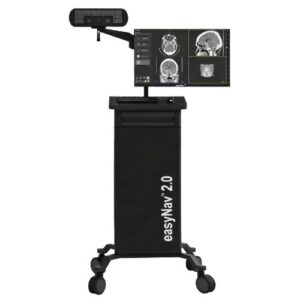
How Image-Guided Surgery (IGS) Works: 

  1. Imaging: Pre-operative CT or MRI scans create highly detailed 3D models of the patient’s anatomy. 
  2. Registration: The patient’s anatomy is mapped to the 3D model, linking the physical body to the digital image. 
  3. Tracking: Specialized tracking systems (infrared cameras or electromagnetic fields) follow the position of surgical instruments via small reflective markers. 
  4. Visualization: The surgeon can see real-time navigation on a computer screen, ensuring accurate placement of tools and avoiding critical structures such as nerves, blood vessels, and the brain. 

Key Benefits of IGS for ENT Surgeries in Hyderabad 

  • Enhanced Safety: Minimizes risk to vital structures (eyes, brain, arteries), especially in procedures like Functional Endoscopic Sinus Surgery (FESS). 
  • Improved Precision: Access narrow spaces like the sphenoid and ethmoid sinuses with high accuracy. 
  • Thorough Tissue Removal: Ensures complete removal of diseased tissue while preserving healthy tissue. 
  • Reduced Complications: Lowers the likelihood of requiring future surgeries and reduces recovery time. 
  • Better Patient Outcomes: Results in faster healing, less pain, and improved post-operative quality of life. 

Common Applications of IGS in ENT Surgeries 

  • Functional Endoscopic Sinus Surgery (FESS): Treat chronic sinusitis, polyps, and tumors. 
  • Skull Base Surgeries: Precision in accessing hard-to-reach areas around the skull. 
  • Sphenoid and Frontal Sinus Procedures: Navigate these narrow, complex areas safely. 
  • Cochlear Implants: Accurately place electrodes and other instruments for optimal results. 

Key Uses of ENT Navigation System in Hyderabad 

  1. Functional Endoscopic Sinus Surgery (FESS): Treat chronic sinus conditions, remove polyps, and clear blockages. 
  2. Skull Base Surgery: Safely reach delicate areas of the skull with minimal risk. 
  3. Dacryocystorhinostomy (DCR): Correct tear duct blockages effectively. 
  4. Cochlear Implants & Ear Surgeries: Precision placement of cochlear electrodes and instruments. 
  5. Cerebrospinal Fluid (CSF) Leak Repair: Locate and seal meningeal breaches with utmost accuracy. 

Advantages of Image-Guided Surgery for ENT Procedures 

  • Increased Safety and Precision: Guides surgeons in avoiding critical structures such as nerves and blood vessels. 
  • Improved Surgical Outcomes: Ensures thorough removal of diseases like polyps and tumors, while preserving surrounding healthy tissues. 
  • Minimally Invasive: Offers more thorough endoscopic procedures with fewer open surgeries required. 
  • Ideal for Complex Cases: Essential for revision surgeries, or when previous treatments distort anatomy. 
  • Shorter Recovery Times: Less tissue damage, reduced bleeding, and faster healing. 
  • Long-Term Cost-Effectiveness: Minimizes the need for repeated surgeries and post-operative complications. 

Positioning of ENT Navigation Systems in Expertise 

While Image-Guided Surgery (IGS) is an invaluable tool, it is not a replacement for a surgeon’s extensive knowledge and skill. It is particularly beneficial in complex scenarios where traditional anatomical landmarks may be distorted, such as: 

  • Revision Sinus Surgery: When scarring from previous surgeries complicates the procedure. 
  • Diseases Involving Critical Structures: Including those near the skull base, optic nerve, and carotid artery. 
  • Large Sinonasal Tumors or Extensive Polyposis: Offering more complete removal and less risk. 
  • Cerebrospinal Fluid (CSF) Leak Repair: Achieving precision when sealing skull base defects. 

FAQs

IGS is a computer-assisted technology that uses pre-operative CT or MRI scans to create 3D models, guiding surgeons with real-time instrument tracking during ENT surgeries. 

IGS improves precision and safety by providing real-time guidance, minimizing risks to vital structures, and ensuring thorough tissue removal for better recovery. 

IGS is used for treating conditions like chronic sinusitis, nasal polyps, sinus tumors, skull base disorders, and aiding in cochlear implant surgeries. 

Recovery typically takes 1–2 weeks for initial recovery and 2–4 weeks for complete healing, with proper post-operative care speeding up the process. 

Yes, IGS is very safe and reduces risks, but patients should consult with their ENT specialist to ensure they’re suitable candidates for the procedure. 

IGS offers minimally invasive surgery, better precision, shorter recovery, and fewer complications compared to traditional sinus surgeries.